

Get in touch with byon
Louis Dünnebier
Sales Professional – SD-WAN – Security
Tel.: +49 69 710 486 746
kontakt@byon.de
your 5-minute consultation
Book an appointment now →


With byon Zero Trust, you gain a comprehensive security solution that ensures no user or device can access your IT environment without rigorous authentication. byon helps you design, implement and manage a Zero Trust architecture that protects your sensitive data and applications from today's evolving cyber threats.
In today's digital landscape, organisations face increasingly complex challenges when securing their networks and IT systems. Traditional security models are reaching their limits because they are often built on the assumption that everything inside the network can be trusted. The Zero Trust model transforms this approach by embracing the principle of "control and verify". Every attempt to access critical business resources is continuously validated and monitored, providing a powerful defence against cyberattacks.
As your trusted cybersecurity partner, byon supports organisations throughout the entire Zero Trust journey. We start with a detailed assessment of your existing IT infrastructure to develop tailored security solutions aligned with your business requirements. Our expertise includes integrating Zero Trust principles into your current environment, implementing advanced authentication mechanisms, and continuously monitoring and refining security policies.
With byon by your side, you benefit not only from technical expertise but also from strategic guidance that strengthens your organisation's long-term security posture and helps safeguard your most valuable data.
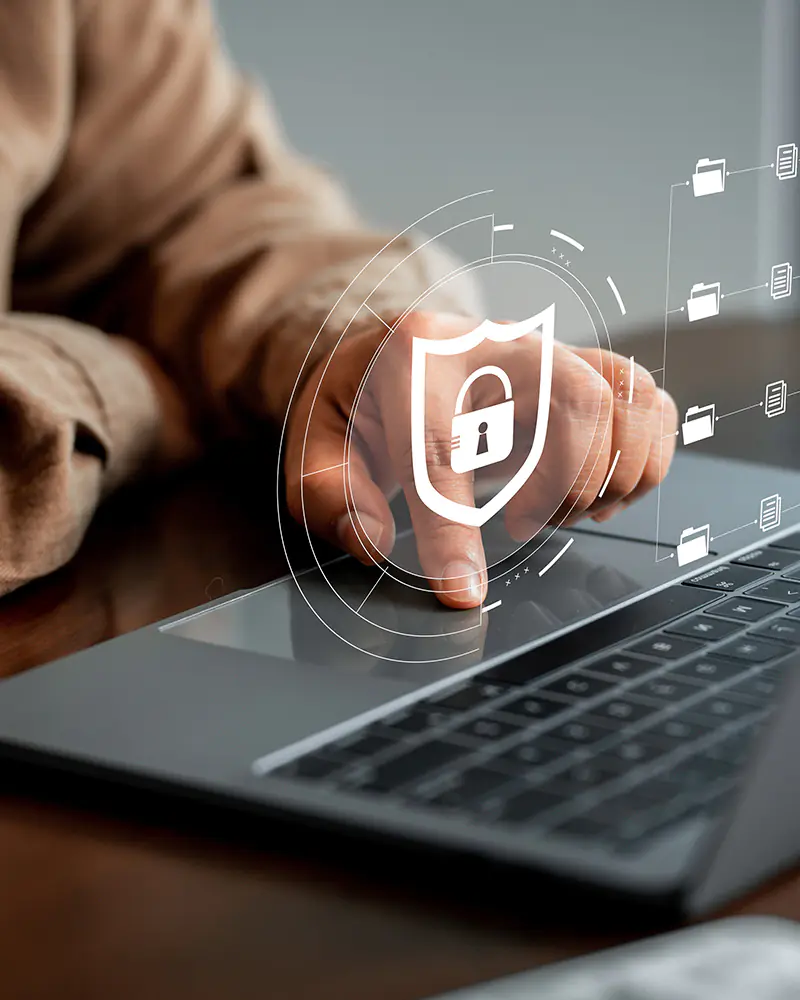
The Zero Trust approach is based on a simple principle: no user or device should be trusted by default, regardless of whether they operate inside or outside the corporate network.
Instead, every request for access to corporate resources is continuously verified and authenticated. Developed in 2009 by John Kindervag at Forrester Research, the concept has since become a cornerstone of modern cybersecurity strategies.


Before implementing a Zero Trust framework, organisations must first conduct a comprehensive inventory of all network assets and assess their criticality. This enables security teams to prioritise protection efforts and focus on the most valuable resources.
Maintaining a clear overview of all users and devices within the corporate network is essential. Every user and device must be uniquely identified and authenticated before access to corporate resources is granted
Modern enterprise networks are connected to a wide range of devices, including IoT and BYOD (Bring Your Own Device) endpoints. A Zero Trust architecture requires continuous discovery, monitoring and identification of every device with access to the network.
We deploy solutions that continuously monitor and analyse network traffic, enabling the early detection of suspicious activity and a rapid response to potential threats.
Adaptive authentication uses contextual information to dynamically determine access permissions, providing an additional layer of security without compromising usability.
We replace traditional VPNs with Zero Trust Network Access (ZTNA) to deliver more secure, granular access controls and better protect access to sensitive resources.
By implementing network segmentation and establishing dedicated control zones, organisations can provide stronger protection for sensitive data and applications. These zones make it easier to enforce strict access controls across specific areas of the network.

Reducing Risk
The Zero Trust model minimises the attack surface by eliminating implicit trust for users and devices. As a result, even if an attacker gains access to the network, their ability to move laterally and access critical resources remains significantly restricted.
Greater Visibility and Control

Enhanced Security for Cloud and Mobile Environments
A robust IAM solution forms the foundation of every Zero Trust strategy. It ensures that only authorised users have secure access to the resources they need. This is achieved through strong authentication mechanisms such as Multi-Factor Authentication (MFA) and adaptive authentication.
Ready to strengthen your organisation’s security posture?
Contact us today to learn more about implementing a Zero Trust strategy and discover how we can help protect your critical data, applications, and IT systems.

The Zero Trust model is built on the principle of "control and verify", whereas traditional security models often assume that anything within the network can be trusted. Zero Trust continuously authenticates and validates every request for access to corporate resources, helping to strengthen security across the entire IT environment.
No. Zero Trust is suitable for organisations of all sizes. It provides a scalable security framework that can be adapted to specific business requirements and existing IT infrastructures, regardless of company size.
Implementation timelines vary depending on the organisation's size, complexity, and existing IT landscape. A phased rollout focusing on the most critical assets can often be completed within a few months, while a full-scale Zero Trust transformation may require a longer timeframe.
Yes. Zero Trust integrates seamlessly with existing IT systems and security solutions, including firewalls, identity management platforms, and multi-factor authentication. It complements and strengthens your overall security architecture rather than replacing existing investments.
Zero Trust enhances security while maintaining a smooth user experience. Modern authentication methods, such as multi-factor and adaptive authentication, help ensure secure and convenient access to business-critical applications and resources.
No. Zero Trust extends far beyond network security. It protects applications, data, cloud services, mobile devices, and hybrid IT environments while ensuring that only authorised users and devices can access sensitive resources.
The cost of implementing a Zero Trust architecture depends on the scope of the project, the security solutions required, and the complexity of the existing IT environment. We begin with an assessment of your current infrastructure and then provide a tailored proposal based on your specific requirements and business objectives.
No. Zero Trust is designed to complement and enhance existing security controls rather than replace them. It works alongside your current cybersecurity strategy to provide stricter access controls and a stronger overall security posture.
Zero Trust mitigates insider threats by continuously authenticating and monitoring every user and device, regardless of their location within the network. The principle of least privilege further limits access, ensuring users can only access the resources necessary for their roles.
Zero Trust provides centralised visibility and control over user access, applications, and network resources. Continuous monitoring and policy enforcement enable organisations to respond quickly to evolving threats while maintaining consistent security standards.
Yes. Zero Trust supports compliance with data protection and regulatory requirements by strictly controlling access to sensitive data and ensuring that only authorised users and devices can gain access. This helps minimise the risk of data breaches and unauthorised activity.
The cloud plays a critical role in modern Zero Trust architectures as more applications, services, and data are hosted in cloud environments. Zero Trust ensures secure, policy-driven access to cloud resources, regardless of where users or devices are located.
Zero Trust enables digital transformation by providing a secure, flexible, and scalable security framework. This allows organisations to adopt new technologies, cloud services, and modern working models while maintaining control over security and data access.
Contact & Enquiries
Would you like to find out more about the benefits
of our byon products and services?
Why not get in touch with us today –
we’d be happy to help.
Louis Dünnebier
Sales Professional – SD-WAN – Security
Tel.: +49 69 710 486 746
your 5-minute consultation
Book an appointment now →
Louis Dünnebier
Sales Professional – SD-WAN – Security


